House Clearance Earls Court: Recycling and Sustainability Commitment
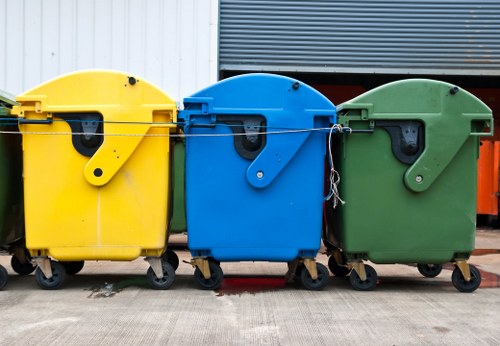
House Clearance Earls Court takes a proactive role in creating an eco-friendly waste disposal area and a truly sustainable rubbish area for residents and landlords across Earls Court and neighbouring boroughs. Our approach to clearing properties focuses on maximising reuse, recycling and responsible end-of-life treatment so that fewer items reach landfill and more materials re-enter the circular economy.We set a clear recycling percentage target for every clearance job: a minimum of 85% diversion from landfill through donation, resale, recycling and proper hazardous-material handling. That target is ambitious yet realistic for household and commercial clearances in a dense urban setting like Earls Court, where established borough recycling streams and local facilities make high diversion rates achievable. Reducing carbon and waste per job is measured and published internally to drive continuous improvement.
Local transfer stations and materials recovery
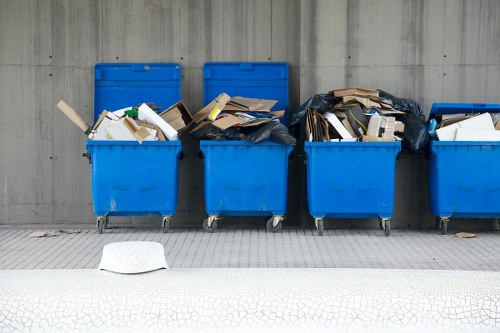
We operate with close links to local transfer stations and Materials Recovery Facilities (MRFs) that serve the Royal Borough of Kensington & Chelsea and neighbouring West London boroughs. By routing sorted loads through these authorised sites we ensure recyclable paper, card, glass, metal and plastics are processed correctly. Our logistics minimise double handling and reduce vehicle miles, supporting an efficient, lower-impact eco-friendly disposal chain.To make on-the-ground delivery tangible, our team provides targeted separation at the property so that mixed items are pre-sorted into reuse, recycling and disposal streams. Local transfer stations we regularly partner with include borough-managed waste hubs and contracted MRFs that accept bulky household goods, white goods and construction-related materials; these facilities operate in coordination with the boroughs' recycling strategies to keep the sustainable rubbish area flowing.
Partnerships with charities are central to our reuse-first policy. We collaborate with local and national charities such as Emmaus, Shelter and the British Heart Foundation to redirect furniture, working appliances and usable household items to people in need rather than to landfill. In many clearances, items that are assessed as safe and functional are recovered on-site and booked for collection by charity partners the same day.
Practical recycling activities and borough approaches
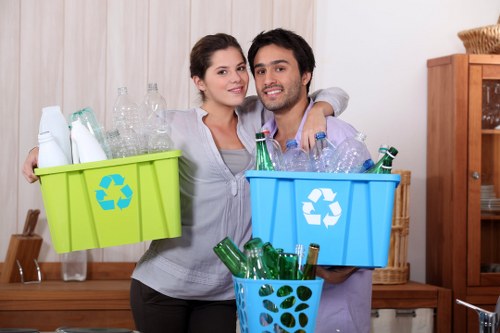
The borough approach to waste separation—paper and card, mixed recycling, glass, food waste and textiles—supports a variety of recycling activities relevant to Earls Court clearances. We undertake furniture salvage, textile sorting for charity and specialised segregation of electricals to ensure Waste Electrical and Electronic Equipment (WEEE) is handled at licensed facilities. This matches the local municipal emphasis on separate streams to improve recovery rates and reduce contamination.Our vehicle fleet is designed with emissions and local regulations in mind. We operate low-carbon vans including fully electric and hybrid models where practical, alongside Euro VI engines for heavier units. All vans are ULEZ-compliant and fitted with route-optimisation software to reduce mileage and idle time. These measures reduce the carbon footprint of every Earls Court house clearance and support a measurable reduction in overall service emissions.
On-site, crews use best-practice sorting: separate skips and containers for metals, inert materials, wood, plasterboard and hazardous residues. We maintain a documented chain-of-custody for problem items (asbestos suspects, paint, solvents and certain batteries) and ensure these are taken to authorised hazardous-waste transfer stations. This careful approach preserves the integrity of the wider eco-friendly waste disposal area in which we operate.
We also support community recycling initiatives and scheduled bulky-waste days run by local councils. By aligning our calendars with borough collection programmes, we make it easier to donate or recycle usable items through municipal or charity-led channels rather than sending them to private landfill contractors.
Transparency and targets drive our sustainability work. We audit disposals, track tonnes diverted and publish internal metrics against our 85% recycling target. When full diversion isn’t possible, we document why and seek alternative reprocessing options. Continuous improvement means investing in better sorting tools, expanding charity networks and trialling greener fuels and electric lifting equipment to further shrink the carbon intensity of clearances.
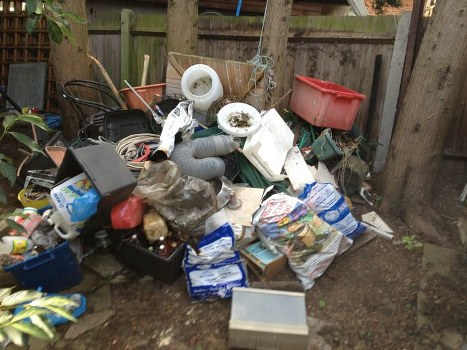 Donations and resale routes are central to our circular approach: items that can be refurbished are routed to social enterprises and charity shops, while broken-but-repairable items are channelled to community repair cafes or specialist recyclers. These multiple outlets expand the life of materials and conserve the embodied energy of goods originally brought into homes across Earls Court.
 Commitment to a greener clearance service: Our promise is simple — every House Clearance in Earls Court is planned and executed to create an effective sustainable rubbish area and to support an eco-friendly waste disposal area. Through local transfer station partnerships, charity collaborations, responsible hazardous handling and a low-carbon vehicle fleet, we deliver clearances that respect local regulations and the environment while maximising social value.